

In a world obsessed with branding, we chose something more radical: respect.
What if the most ethical thing a brand can do… is step aside?
In an industry built on visibility, Woven Wildly chose absence. Our name doesn’t appear on the mochila bags we share with the world — not on the strap or the seam. These handwoven mochila bags, crafted over months by Indigenous artisans from the Kogui, Wayuu, and Arhuaca communities of Colombia, are sacred vessels of tradition — not commodities to be rebranded. We didn’t design them. We don’t own them. We help carry them forward — with care, storytelling, and reinvestment in the communities who made them. In a time when even good intentions can feel extractive, we believe the most powerful statement is the one we chose not to make. When we started Woven Wildly, one of the first decisions we made was to stay invisible. No label. No credit. Just the work itself.
1. The Question That Gets Asked
“Where’s your label?”
It’s one of the first questions we get. In an age when almost everything is branded, people are often surprised to find that Woven Wildly doesn’t stitch our name onto the mochila bags we help share with the world. There’s no tag, no leather patch, no logo. Just the bag.
And that’s very intentional.
Because from the beginning, we knew the spotlight didn’t belong to us. The craft already had a name — and it wasn’t ours.
In a world obsessed with logos, silence isn’t just rare — it’s radical.
2. This Craft Has a Name. And It’s Not Ours.
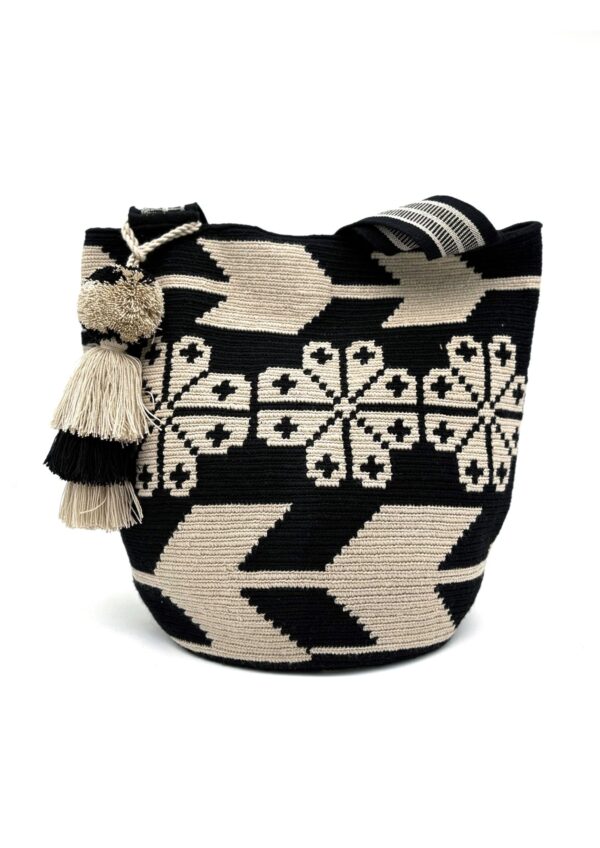
Every mochila you see here was made by hand, over months, by Indigenous artisans from the Kogui, Wayuu, and Arhuaca communities of northern Colombia. Each handmade mochila bag carries centuries of tradition. A unique rhythm. A distinct voice.
To put our brand name on that would be, in a sense, to overwrite theirs.
Long before Woven Wildly ever existed, these communities were weaving knowledge into thread — like Francisca, a Kogui artisan whose hands carry generations of memory, finishing a mochila by firelight while her baby slept nearby —preserving spiritual beliefs, agricultural wisdom, family lineages, and sacred connections to the land. We didn’t create this art. We’re not here to rebrand it. We’re here to protect it.
We see ourselves not as designers, but as bridge-builders — people helping carry ancestral stories into modern hands, without reshaping the identity behind them.
3. Sometimes Putting Your Name on Something Is a Form of Taking
Even brands with good intentions can unintentionally center themselves in someone else’s story. They add their logo as a sign of support, but it can end up drowning out the original voice.
That’s not collaboration. That’s co-opting. As more brands scramble to signal sustainability, few are asking the harder question: should we even be visible?
For us, the greatest respect is in restraint. We don’t label the bags because we believe that the work — and the culture behind it —should be able to speak without interruption.
Stitching our name onto a mochila wouldn’t honor the work — it would overwrite it.
4. There Are Other Ways to Share Truth
Woven Wildly still tells the story. Just not on the bag.
Instead, we:
-Include artisan names and community details on hangtags and postcards.
-Share photo essays.
-Publish blogs that document the full process from raw cotton or fique to finished mochila.
-Offer QR codes linking to deeper stories.
We believe that transparency doesn’t have to be loud. It just has to be honest. It’s one way we practice ethical Colombian fashion — not by branding the work as ours, but by honoring it as theirs. Every sale goes back into the community — supporting education, clean water, food drives, and renewable energy. These bags have helped build a school in Tayku, bring food and water filtration to families and power homes with solar light.
5. The Only Signature Should Be the Work Itself
Some brands sign their name in thread. We believe the true signature is already woven in, in the patience, in the pattern, in the process.
So no, you won’t find a Woven Wildly label stitched into your mochila. Because what you’re holding isn’t a product of our design. It’s a living expression of ancestral knowledge.
And that deserves to stand on its own.
“When you carry a fair trade mochila bag from Woven Wildly, you’re not showcasing our brand. You’re carrying a living tradition, passed down through generations in the Sierra Nevada de Santa Marta.”
6. That’s why we don’t need a label on the bag. Because the story speaks for itself.
Every stitch is part of a living culture. Every bag carries a name far older than ours. And that’s the name we’re here to protect, preserve, and share — quietly, respectfully, and without interruption.
We share this story as Woven Wildly — a living collaboration with Indigenous communities of the Sierra Nevada de Santa Marta. We don’t just sell mochilas. We carry culture.
Thank you for reading, for caring, and for helping preserve what matters.

This is what it’s really about — not just what we carry, but who we carry it for.
Every mochila sold helps keep these communities strong, self-sustaining, and seen.


Such an honorable thing for you to be doing. Great that you’re helping these communities grow and that you’re helping them with their journey. It’s not always about branding, but the story behind it – and in my opinion it’s the right way to go about it.
Thank you so much, Spencer — your words truly mean a lot to us. It’s been a humbling journey, and we believe the most powerful impact happens when stories are protected, not rebranded. We’re honored to walk beside these communities and grateful for people like you who understand why that matters. 🙏🏽
This is one of the most refreshing pieces I’ve read in a long time. It is so rare to see a brand lead with this kind of humility and respect. In a world where branding often overshadows origin, Woven Wildly’s choice to remain invisible is rare and deeply respectful. It’s so nice how you are honouring the Indigenous artisans and their traditions without trying to take credit. It is a great reminder of where true creativity and culture comes from. Thank you for sharing this.
Thank you so much, Anna your words truly moved us. We believe that honoring the origin and voice of each artisan is far more important than any brand identity. Your reflection reminds us why this work matters. Deeply grateful you took the time to share this.
Beautifully said and such an honorable approach to work with this community. Perhaps the most special part about it is that these women can stay in their communities and continue the sacred weaving work while being connected to the same land their ancestors walked so many years ago. These truly are not just bags, they are living breathing works of art that whisper cultural wisdom in the ears of those willing to hear the gentle strength and patience the traditional symbols echo into open hearts. Thank you for your efforts to preserve.
Thank you so much, Andrea your words mean more than you know. We deeply believe that preserving this weaving tradition means preserving a way of life, a rhythm, and a wisdom that still has so much to teach us. These women carry centuries of quiet strength in their hands, and we’re honored to walk beside them. Thank you for seeing them …truly seeing them — and for echoing their story with such care.
lovely to see a brother helping out where he can, proud of you❤️
Appreciate you, brother that means more than you know. It’s all about doing what we can, walking alongside others, and trying to make a difference where it counts. Thanks for being part of that support.
Es muy bonito ver que aun existe cultura y trabajo humilde.
El trabajo artesano es mas que un arte, es su dia a dia, lo que ellos desde pequeños hacen para subsistir y regalar un pedazo de humildad y de su mundo.
Gracias por proveer un pedazito de este mundo indigena y su arte.
This is one of the most refreshing and thoughtful brand philosophies I’ve come across. In a world where everyone is scrambling for visibility, the choice to step aside and let the work — and the culture — speak is both radical and deeply respectful. The way you honour the Kogui, Wayuu, and Arhuaca traditions without rebranding or overshadowing them is powerful. Thank you for showing that true ethical fashion isn’t just about how something is made, but who it’s made for — and how their story is carried. This approach sets a new standard for integrity in cultural collaboration.
Shane, thank you deeply for this. You captured the heart of what we’re trying to do better than we ever could. The idea that cultural collaboration can be powerful without being loud is something we stand by and it means the world to know that came through. Your words are both grounding and inspiring.
That means a lot, Callum – thank you. It’s clear how much thought and integrity has gone into every part of Woven Wildly, and I have huge respect for the way you’re doing things. I’ll keep cheering you on from this side.
I love the way you demonstrate respect for the community, the craftsmanship and the work that goes into the weaving of these mochilas. A brand does not have to claim ownership or be a symbol for other people to see. Having a purpose, doing good speaks more than any label or.
Sylvia, thank you for this beautiful reflection. We truly believe that purpose, not branding, is what gives something value, and honoring the people behind each mochila is at the center of that. We’re so grateful that you see and feel that intention.
Muchas gracias, José. Tus palabras nos llegaron al corazón. Es un honor poder compartir aunque sea un pedacito de este arte tan humilde y profundo, que nace del día a día de estas comunidades. Para nosotros, el trabajo artesanal no solo es cultura, es vida, es dignidad, es sabiduría ancestral. Gracias por ver y valorar eso con tanta sensibilidad.
Great story, really inspirational. And very brave to care go beyond marketing laws and focus on spotlighting the makers. Shows great love and respect!
Thank you so much, Wouter that truly means a lot to us. It’s not always easy going against the grain in this industry, but honoring the makers and their stories is at the heart of everything we do. We’re grateful you see and value that. Your words give us strength to keep walking this path.
Absolutely inspired by Woven Wildly’s approach to honoring Indigenous craftsmanship and community! The decision to forgo branding on the bags speaks volumes about the respect and authenticity behind this collaboration. Each mochila is not just a product but a testament to ancestral wisdom and cultural heritage. It’s heartening to see a commitment to ethical fashion that prioritizes people and traditions over profit. Thank you for bridging worlds and bringing these beautiful stories to the forefront. Truly a model for conscious and respectful collaboration.
Thank you so much, Eric — your words truly moved us. We’re deeply grateful that you see and feel the intention behind what we do. Honoring the ancestral knowledge and cultural dignity behind each mochila is at the heart of Woven Wildly, and your reflection reminds us why this work matters. Thank you for standing with us in valuing people over profit, and for helping carry these stories further through your support and encouragement.
The homage to the tradition and staying true to that vision is applauded. Thoughtfully inspiring and fresh breath in the modern day.
Thank you so much, James — your words truly mean a lot. Honoring tradition while building something meaningful in today’s world is at the heart of everything we do. We’re grateful it resonated with you, and we’re so glad to have you here with us on this journey.
What Woven Wildly has done is seamlessly bridged indigenous art with modern fashion. Each mochila is not only a unique fashion accessory, but a piece of history. A history that predates western civilization’s greatest cultures. To most it’s simply a bag, but to those that make the mochilas it preserves their history. Each mochila is the blessing of indigenous knowledge passed down from generation to generation. Yes the bags are beautiful. More importantly the true beauty lies in the words ,ideas, blessings, prayers and traditions that we in modern society can only aspire to leave behind such an inheritance for those that will come after us.
Nkosi, thank you deeply for this beautiful reflection. Your words capture the very spirit of what we hope to protect and share through Woven Wildly. These mochilas truly are more than objects — they carry memory, prayer, ancestry, and intention. It means so much to know this message resonated with you. We’re honored to walk beside those preserving this inheritance for the generations still to come.
Awesome Blog 😍 Looking forward to read more in the futher. And definitely will get one the next time im closer!
Thanks so much, Lenny! Can’t wait for you to get on we’ll be here when you do! 🙌
Labels are of the past and for a small group of people. Most people just want quality, detail, craftsmanship. These are what these bags offer.
Thank you Marcus beautifully said. That’s exactly what we believe too. These bags carry generations of knowledge, patience, and meaning. It’s never been about putting our name on them it’s about honoring the names, hands, and hearts behind each stitch. Grateful to have your voice in this conversation