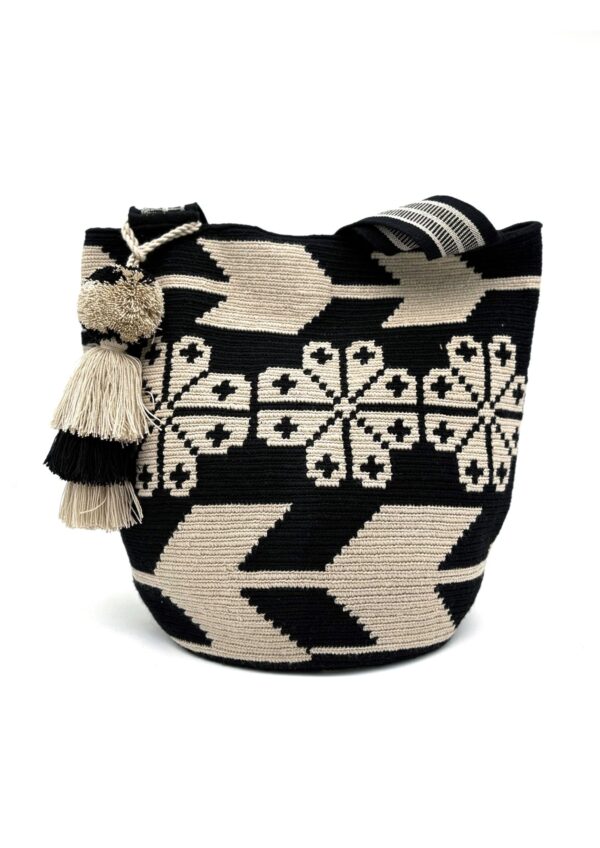
These aren’t just bags. They’re lives. Woven slowly, patiently — and almost always by the hands of women whose stories rarely get told.
Before a single stitch is made on a mochila bag, there’s a woman sitting by the fire — maybe with a baby resting beside her, maybe with a chicken walking through the yard, maybe with a thought heavy on her heart. And she begins to weave.
At Woven Wildly, we don’t design these bags. We walk beside the Indigenous women who do. These stories aren’t borrowed or imagined. They come from real conversations, from time spent together in the Sierra, and from years of living in the rhythm of this land.
Most people see the bag — the patterns, the size, the colors. But they rarely ask who made it. Or what she was thinking as she worked. Or what she carried before that bag ever reached your hands.
This blog is for them — Francisca, Johanna, and Isabela — three women from Tayku who weave not just for income, but for identity, healing, memory, and hope.
1. Francisca: Weaving Is Who I Am
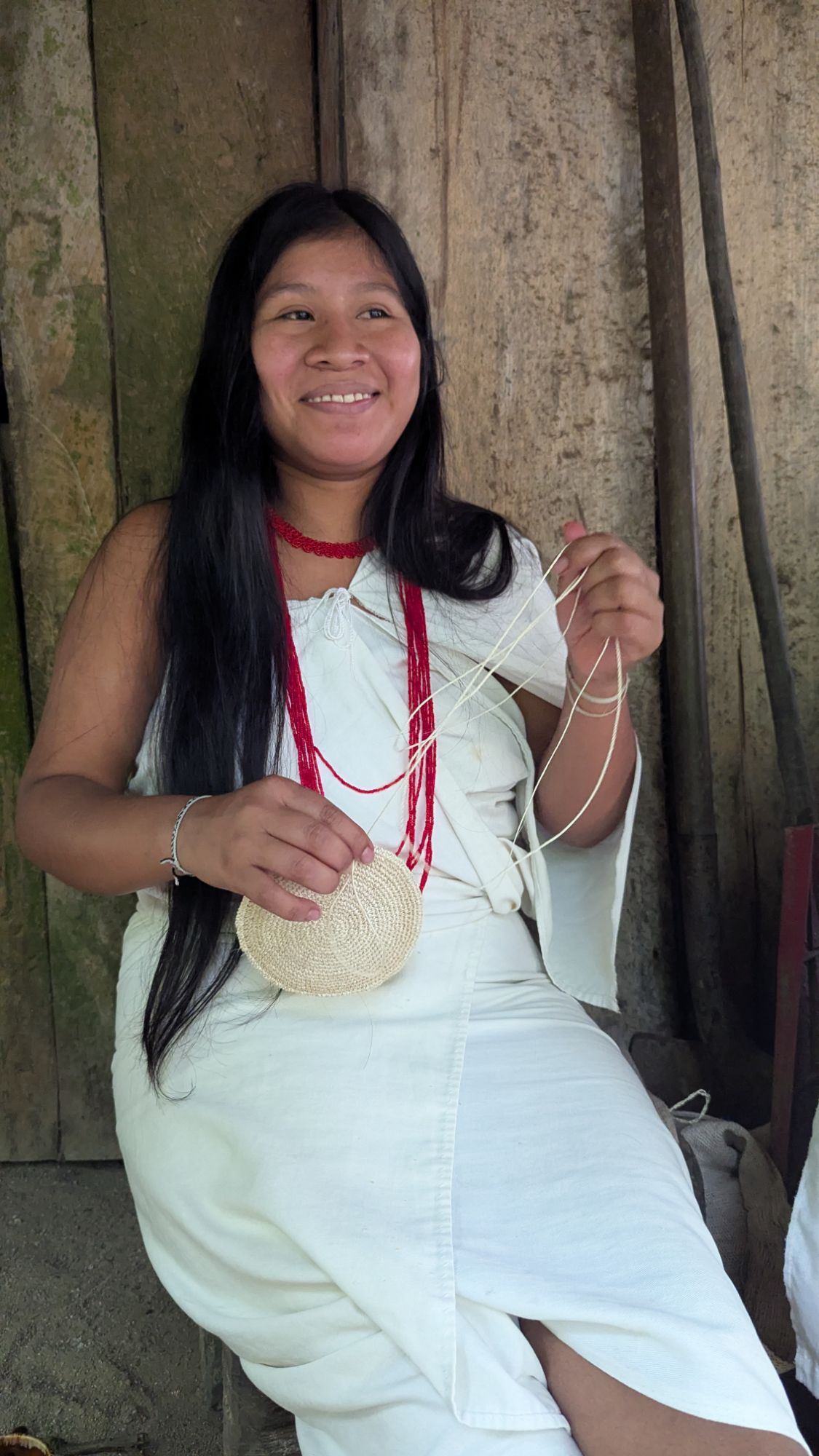
Francisca weaving at home — each stitch a memory, each loop a reflection.
“The thread listens,” she said, hands never pausing. “It always listens.”
Francisca is the youngest of the three, but her weaving holds deep wisdom. For her, the act of weaving is meditation — a time when she reflects on life, thinks through pain, and channels emotion into every stitch. She uses natural colors: ochre browns, golden yellows, deep purples — each one a prayer in fiber.
Some of her fondest memories are riding on her father’s shoulders through the jungle, watching the sunset over the mountains. When she lost a child, it was through weaving that she found solace. Weaving became a kind of healing — not just a craft, but a lifeline.
Her message to the world is this: “We must walk with Pachamama, not against her. We’ve seen the rains come later, the heat stay longer. The plants don’t bloom like they used to. These changes — they’re not natural. They’re a sign.”
What she hopes her children will remember about her: That she lived simply, joyfully, and always honored her culture. That through her weaving, she passed down something sacred.
Her advice to us — the younger brothers and sisters: Slow down. Listen to the earth. Protect what gives you life.
2. Johanna: Threads of Memory
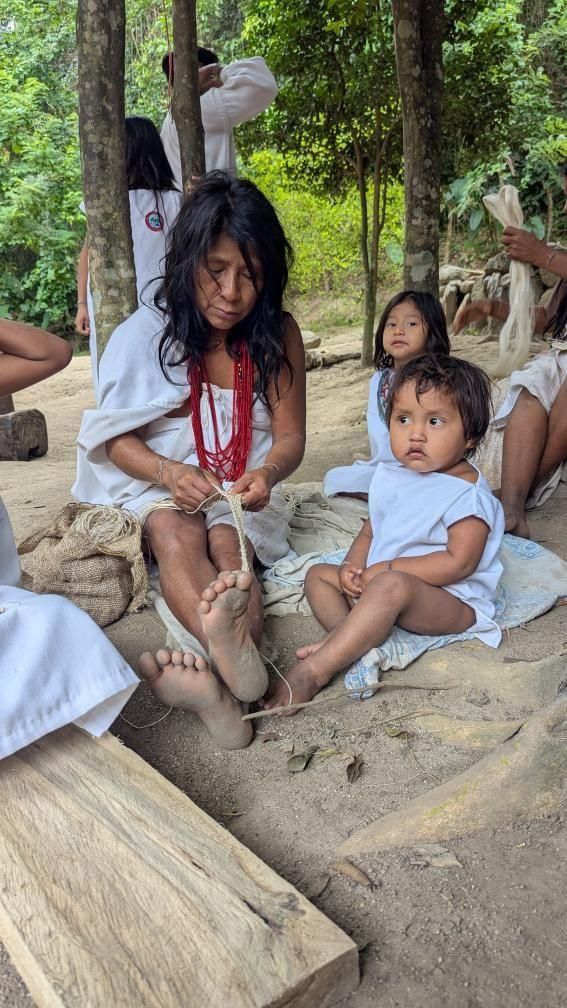
Johanna, the eldest weaver in Tayku, stitching memory into fiber as her grandchildren watch quietly beside her.
Johanna is the eldest of the three women, a quiet force of tradition. Her fingers know the feel of fique like a second skin. Her eyes have watched the world shift — faster roads, hotter days, shorter cycles. But she still sits in the same posture her mother taught her, under the same sky.
She believes that weaving is how they keep the world in balance. She’s seen too much to give in to despair. Instead, she focuses on what she can do: raise her grandchildren well, tend to her land, and pass on knowledge that was never written, only lived.
She loves fresh fruit, picked right from her trees. Mango, papaya, and guava — still warm from the sun. It’s one of the small joys she never tires of.
What she hopes her children will remember about her: That she was strong. That she loved deeply and held their world together with her hands.
Her advice to us — the younger brothers and sisters: Learn from the old ones while they’re still here. The earth speaks, but only if you’re willing to get quiet enough to hear it.
3. Isabela: Weaving Beside the Cradle

Isabela, the second eldest weaver, stitching strength beside her baby in Tayku.
Isabel is the second eldest — spirited, kind, always moving. She weaves quickly, not out of haste, but rhythm. Her joy is in the doing. She laughs often and finds pleasure in small things: the softness of a new ball of thread, the sound of chickens in the morning, the first sip of fresh pineapple juice.
Her mochila designs reflect her spirit — bold, earthy, and alive. To her, every bag is a little reminder that beauty comes from patience, and that usefulness doesn’t have to mean plain.
What she hopes her children will remember about her: That she smiled often. That she gave what she could. That she made things that mattered.
Her advice to us — the younger brothers and sisters: Care for each other. The land is tired — so share, repair, and never take more than you need.
4. What You Carry
These women don’t sign their names on the bags. But they leave something deeper.
Their stories. Their strength. Their unseen hours.
Every mochila bag we share is made slowly — one stitch at a time. No machines. No shortcuts. Just memory, earth, and meaning.
This is artisan weaving. This is rooted fashion. This is the living knowledge of Indigenous women, still holding the thread.
So when you carry one — you’re not just holding a bag. You’re carrying the voice of Francisca. The memory of Johanna. The strength of Isabela.
You’re walking with something that remembers where it came from.
We share this story as Woven Wildly — a living collaboration with Indigenous communities of the Sierra Nevada de Santa Marta. We don’t just sell mochilas. We carry culture.
Thank you for reading, for caring, and for helping preserve what matters.

This is what it’s really about — not just what we carry, but who we carry it for.
Every mochila sold helps keep these communities strong, self-sustaining, and seen.