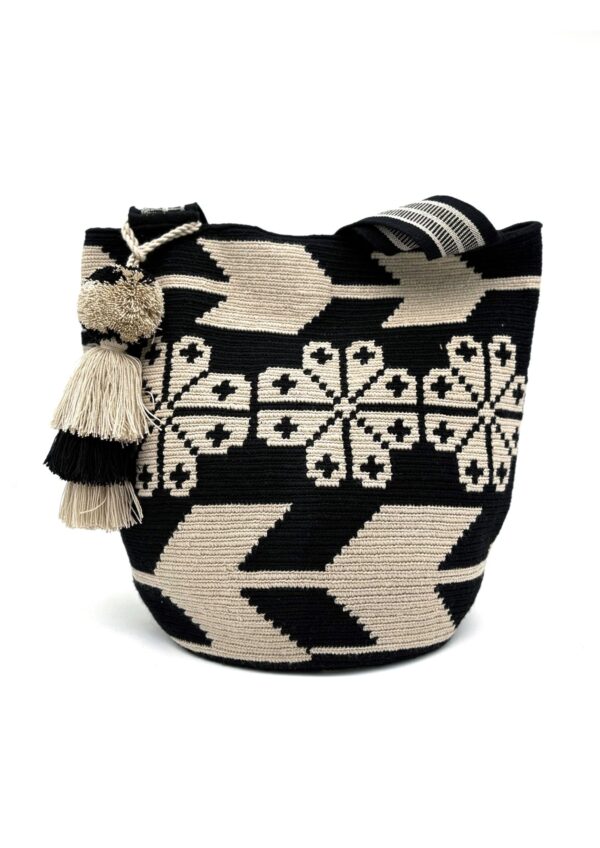
Rethinking Value in a World Obsessed with Logos
In today’s fashion industry, value is often measured by the wrong things — logos, hype, and price tags. But what if the truest forms of luxury aren’t found in Parisian showrooms, but in the hands of Indigenous women weaving stories into fiber in the Sierra Nevada mountains of Colombia?
At Woven Wildly, we don’t just sell handmade mochila bags. We walk beside the people who create them from fiber to future. And we believe it’s time to redefine what we call “worth.”
1. The Illusion of “Luxury”
Let’s be honest — the high fashion world has mastered the art of illusion.
A handbag with a luxury label might cost $10,000, but it’s often machine-stitched, factory-assembled, and mass-produced far from the glamorous boutiques where it’s sold. It carries prestige, not necessarily craftsmanship.
You’re not always paying for what it is.
You’re paying for what it represents. But prestige without purpose is just a price tag.

She thought she was buying craftsmanship — but realized she was only buying a brand name. Prestige without purpose is just a price tag.
2. The Reality of Handmade
Now, let’s go higher into the mountains where the work is quiet, patient, and personal.
In the Kogui and Arhuaca communities we collaborate with, a single mochila takes months to create. The process is entirely handmade—no factories, no machines.
Fique or cotton is harvested by hand. Fibers are stripped, softened, and spun using ancestral tools. Natural dyes from local plants are used to color the thread.
Every stitch tells a story—sometimes sacred, often generational.
These aren’t just handmade bags. They’re living heritage. And in a just world, they’d be treated as such.
3. Why Handmade Should Cost More
Here’s the contradiction we have to face: mass-produced bags from global fashion houses are often seen as more valuable than handwoven bags made by Indigenous women who’ve inherited their craft through centuries.
But if a machine-made tote sells for $5,000, what is the true value of a sacred weave crafted by memory, spirit, and hand?
We believe anything 100% handmade especially when it carries cultural significance—should never be considered “cheap.”
Fashion isn’t just about materials. It’s about meaning.
4. Why Our Prices Are Still Accessible
We could charge $500 or more per mochila and still be within reason. We’ve been told that by stylists, curators, and collectors alike.
But we’ve chosen something different:
“We keep our prices accessible so that more people can carry culture—not just consume it.”
Our handmade mochila bags range from $120 to $350. And behind every purchase is a ripple effect:
Food on the table for families
Clean water via reverse osmosis systems
Solar panels that light up homes and schools
Educational access for children in remote areas
“You’re not just buying a bag. You’re becoming part of something bigger.”
5. What the Fashion Industry Won’t Tell You
They won’t tell you that “handmade” often means machine-made, with a few finishing touches added just to justify the label.
They won’t tell you that many so-called “ethical” brands still underpay the very artisans they spotlight, especially Indigenous makers whose patterns, stories, and heritage they borrow without permission.
They won’t tell you that most brands can’t trace their supply chain beyond a spreadsheet. Or that they consider anything slow, sacred, or time-intensive a problem to be solved — not a value to be honored.
But we will.
Because the truth matters and so do the questions:
Who made this?
How long did it take?
What does it support?
What does it say about me when I wear it?
Here, you know!
You know the woman who spun the thread.
You’ve seen the school her weaving helped build.
You’ve seen the water systems, the solar light, the food on the tables.
This isn’t marketing.
This is memory.
This is relationship.
This is what fashion can look like when it remembers who it’s made for and who it’s made by.
When you ask better questions, you make better purchases.
Ones that align with your values, your ethics, and your vision for the world.
6. Final Reflection
We live in a time where speed is currency and status is everything. But beneath all that noise, something deeper is calling.
It’s the quiet dignity of a mother passing her weaving knowledge to her daughter. It’s the light from a solar-powered lamp guiding a child’s homework. It’s the clean water filling a jug where once there was none.
This is what our bags are made of.
Not plastic.
Not shortcuts.
Not empty logos.
They’re made of patience, trust, and a thread that ties one life to another — across mountains, across cultures, across time.
“What’s more valuable — the logo, or the life behind the thread?”
We believe fashion should mean something.
That what you carry should carry meaning.
At Woven Wildly, we choose life.
And we invite you to carry it with you.
We share this story as Woven Wildly — a living collaboration with Indigenous communities of the Sierra Nevada de Santa Marta. We don’t just sell mochilas. We carry culture.
Thank you for reading, for caring, and for helping preserve what matters.

This is what it’s really about — not just what we carry, but who we carry it for.
Every mochila sold helps keep these communities strong, self-sustaining, and seen.